Choose a wedding dress by balancing personal style, comfort, venue, and the full cost of wearing it. Start with a spending limit and a few reference images, then try several silhouettes before committing. The right dress should let you sit, walk, breathe, and enjoy the celebration you are planning.
You do not need to know every fashion term before an appointment. A useful starting point is describing how you want to feel: understated, sculptural, romantic, relaxed, or dramatic. Those words give a stylist more direction than a collection of unrelated photographs.
Start with your own wardrobe
Think about clothes you already love wearing. Notice the necklines, sleeve lengths, waist placement, and textures you reach for repeatedly. A wedding dress can feel special without abandoning those preferences. If you dislike stiff waistbands or constantly adjust strapless tops, acknowledge that before shopping.
Save a small number of reference images and annotate them. You may like the drape in one photograph and the sleeves in another. Separating the details prevents an appealing setting or model’s pose from becoming confused with the actual garment.
Learn what silhouettes change
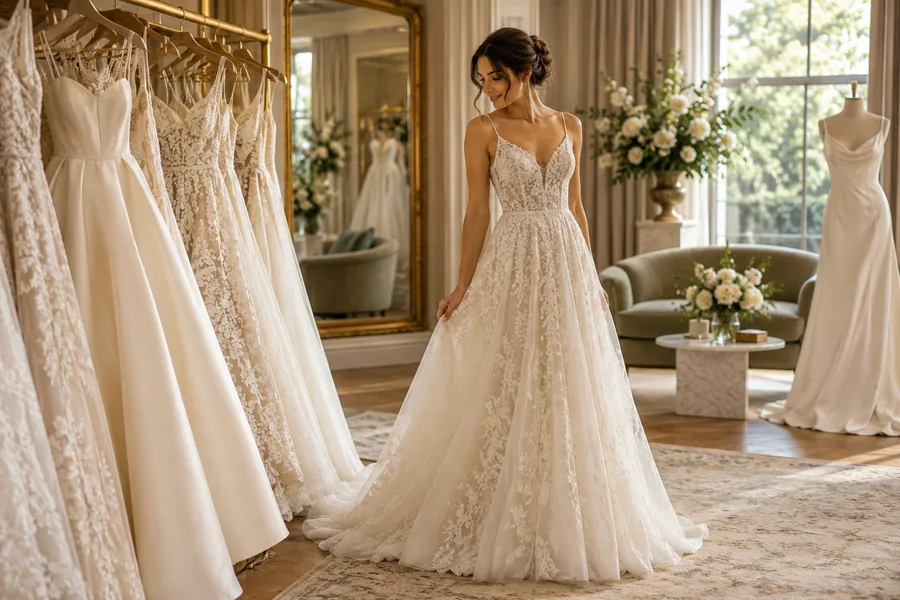
An A-line dress narrows around the upper body and widens toward the hem. A ball gown creates a more pronounced skirt shape. A sheath follows a straighter outline, while fit-and-flare designs become wider below a fitted section. These labels describe construction, not rules about who may wear them.
Try contrasting shapes to understand your preferences in motion. A silhouette that looks unfamiliar on a hanger may feel natural once you walk. Equally, a dramatic photograph may hide a skirt that is difficult to manage in your venue. Evaluate the garment on your body rather than judging yourself against the sample.
Compare fabrics by feel and behavior
Fabric affects how a dress moves, photographs, and feels over several hours. Crepe can create a clean line, tulle adds light volume, and structured satin can support an architectural shape. Lace varies widely in texture and weight. Ask to handle the actual fabric rather than relying only on a name.
Check lining and surface detail together. Beading may feel rough against bare arms, while an unlined panel may need an underlayer you have not budgeted for. Stand near a window to examine the fabric in daylight, with the boutique’s permission. Request guidance before using a camera or flash.
Let the venue inform practical choices
A long train can be beautiful in a formal indoor setting, but it needs a plan on uneven ground. Sand, stairs, narrow aisles, and outdoor temperatures all affect how you will move. Discuss a bustle, removable overskirt, or shorter hem if those options suit the design.
Think about the entire event rather than only the ceremony entrance. Will you eat outdoors, use a shuttle, or dance for hours? Our wedding planning checklist helps connect clothing choices with the schedule. A dress should fit the celebration, including its less photographed moments.
Set an all-in budget
Keep the purchase price separate from the amount available for the complete outfit. Alterations, tax, delivery, undergarments, shoes, cleaning, and accessories can change the total. Ask the boutique which services are included and which are arranged independently.
State the garment budget before trying anything on. It is reasonable to ask that more expensive options stay off the rack unless you request them. If a sample or secondhand dress appeals, check condition, measurements, missing details, and alteration feasibility before treating the discount as a saving.
Prepare for a productive appointment
Ask about appointment duration, guest limits, sample sizing, accessibility, and photography policies. Bring any essential modesty requirements or mobility considerations into the conversation early. Choose companions who understand your preferences and can offer calm, specific feedback.
Wear comfortable clothing and bring the undergarments recommended by the shop. Avoid buying a full set of accessories beforehand. A simple list of questions is more helpful than arriving with a fixed picture that makes every alternative feel like a failure.
- What is the expected delivery window for this exact design?
- What alterations might be possible, and who should assess them?
- What does the deposit cover, and what is the return policy?
- How should this fabric be transported and stored?
Test comfort before you decide
Sit in the dress for several minutes. Raise your arms gently, walk at a normal pace, and practice a small turn. Check whether straps slip, seams rub, or the neckline shifts. Ask the stylist which issues come from the sample fit and which are features of the design.
Consider how you will use the restroom and whether you will need assistance with closures. These are ordinary clothing questions. If the dress requires elaborate management, decide whether that tradeoff is acceptable to you rather than assuming wedding attire must be uncomfortable.
Plan alterations with the right specialist
A tailor should assess the actual garment before promising a change. Taking in a seam, adding support, changing a neckline, and redesigning sleeves are different jobs. Request an itemized estimate and a fitting schedule, especially if the dress has delicate lace or extensive beading.
Bring your intended shoes to hem fittings and follow the tailor’s instructions about undergarments. Avoid making body changes a condition of the dress fitting. Order according to professional measurement guidance and discuss adjustment options realistically. The garment is being fitted to you.
Add accessories after the dress has a direction
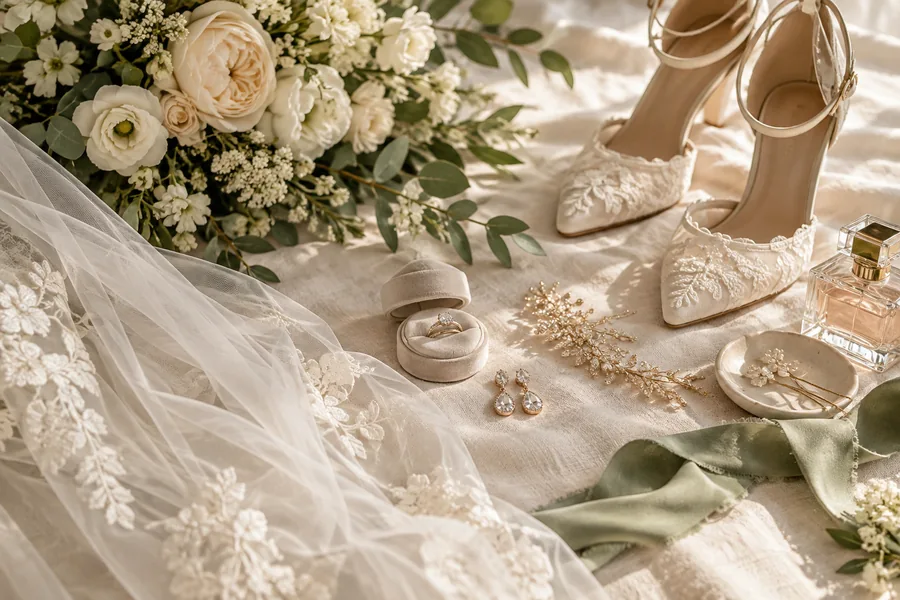
Choose one or two features to emphasize. An intricate neckline may need only small earrings; a clean dress may welcome a more expressive veil. Our bridal accessories guide explains how to combine shoes, jewelry, and hair pieces without buying unnecessary extras.
Photograph the whole outfit together before the final fitting if possible. Check metal tones, veil color, and the height of the shoes. Slight differences can work beautifully, but seeing them together makes the choice deliberate rather than accidental.
Know when the decision is complete
You do not need a dramatic emotional reaction to make a good choice. Clear satisfaction, comfortable movement, and confidence about the cost are useful signals. Record the designer, style, size, color, delivery expectations, and agreed changes before paying.
After ordering, give yourself permission to stop searching. New images will keep appearing, but they do not invalidate a dress chosen thoughtfully. Keep the focus on how the outfit supports your day and how you feel wearing it, rather than trying to win an endless comparison.